PHP is known as a loosely typed or weakly typed language. That means you don’t have to declare variable types when calling functions. PHP does the work of converting one type to another automatically.
But since PHP 7, developers have had the option to enable strict typing. This changes the behavior, making PHP much less forgiving.
Let’s explore how this works and when to use each approach.
Weak Typing: PHP’s Default
By default, PHP is flexible about types. If a function expects an integer, and you pass it a string like “10”, PHP will quietly convert that string into the number 10 behind the scenes.
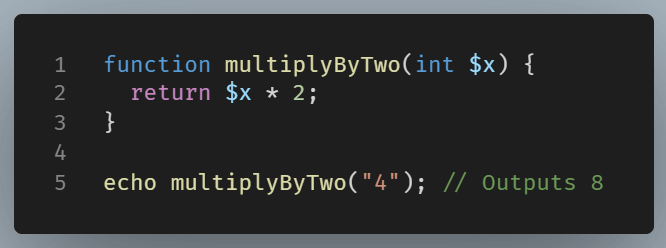
That’s weak typing, which can be convenient, but also risky in big, complex apps.
Enabling Strict Types
To enforce strict typing in a PHP file, you add this line at the top:
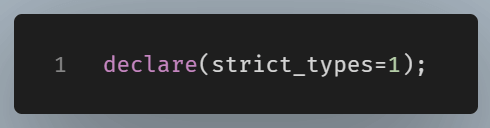
PHP won’t auto-convert for you. If the type doesn’t match exactly, you’ll get a TypeError.
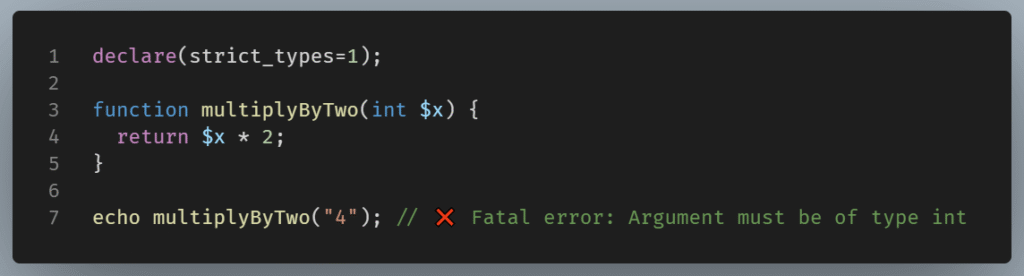
Strict types force you to be precise. It catches bugs early and helps your code behave more predictably.
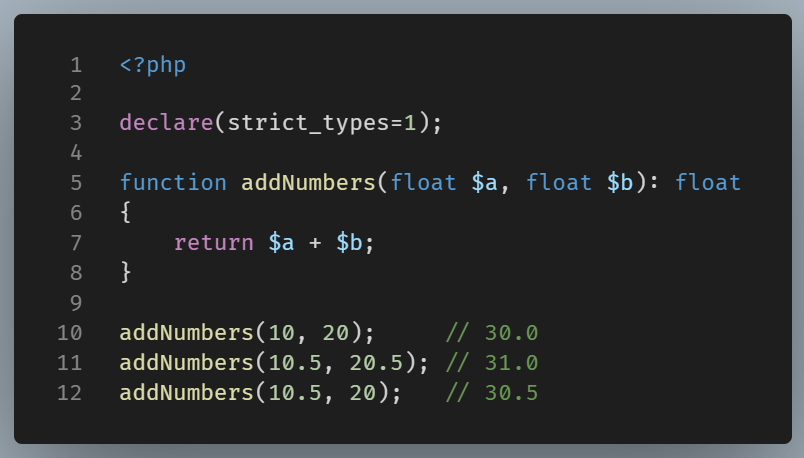
NOTE: Even with strict typing, an integer can be used when a function expects a float.
When Should You Use Strict Types?
Use strict types when:
- You’re building something complex with many dependencies
- You want consistent, predictable behavior
- You’re collaborating with teams that require more robust code.
However, for small scripts or prototyping, weak typing can be fast and useful.
What’s the Real Difference?
With Loose typing (default), PHP converts values for you when types don’t match. It’s flexible and beginner-friendly, but can lead to hidden bugs if you’re not careful.
With Strict types, PHP enforces the types you declare. Its implementation is optional. This typing is stricter and safer, especially in large-scale projects or APIs.
Wrapping Up
PHP gives you the choice of selecting what typing you want. Its default typing is helpful and forgiving, but it can be strict when you ask it to be. Learning both sides of PHP’s type system helps you write cleaner, safer code, without giving up flexibility.