When working with loops in Python, there are cases where you need both the item and its position. You could do that by managing a counter by hand.
That works, but it adds clutter.
The enumerate() function solves this cleanly. It gives you an index and a value at the same time, without extra code.
Why Enumerate Exists
Before enumerate(), developers often used a separate variable to track position. This approach works, but it can feel awkward. You must set the counter, update it, and keep it in sync with the loop.

enumerate() removes that burden. Python handles the counting, and your loop stays focused on the task.
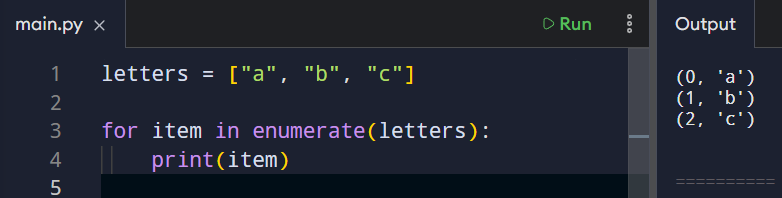
This makes code easier to read and less prone to mistakes.
How Enumerate Works
enumerate() wraps around an iterable such as a list or a string. On each loop, it returns a pair. The first value is the index. The second is the elements value. By default, counting starts at zero, which matches Python indexing.
Inside a loop, enumerate() fits naturally. You unpack the index and value into two variables. From there, you can print them, compare them, or apply logic based on position. This pattern shows up often in programs, especially when processing lists or validating data row by row.
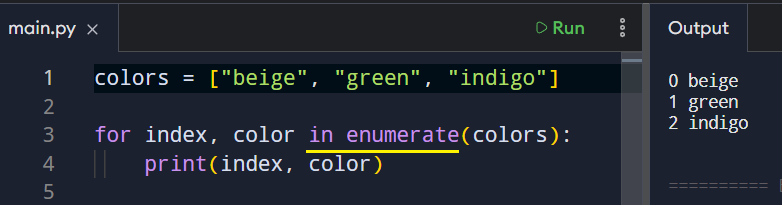
Because it follows standard looping behavior, there is no special syntax to learn. Once you understand it, it feels natural.
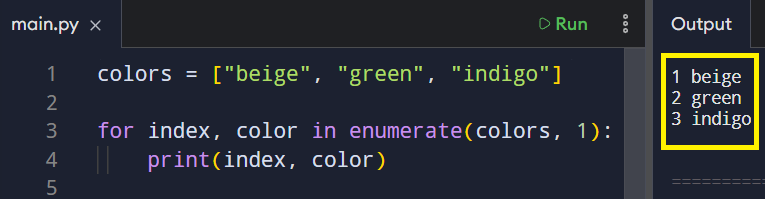
You can also choose a different starting point. This is helpful when displaying human-friendly positions or working with data that begins at one instead of zero.
Conclusion
As you continue working with Python, you will see enumerate() appear often in real code. It pairs naturally with lists, strings, and other iterables. More importantly, it encourages a habit of writing code that is readable and easy to comprehend.
Choosing enumerate() when indexes are needed keeps logic simple and reduces room for error. Code becomes clearer, loops become easier to follow, and programs become easier to maintain.