The type() and isinstance() functions are basic tools for checking data type.
The type() function returns the type of a variable, which can be useful for debugging or understanding what kind of data you’re working with.
It’s syntax is: type(object)
For example:
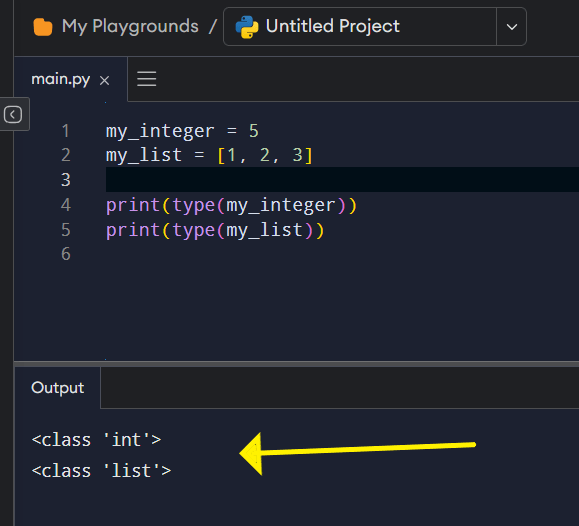
Note: If you insert no arguments to the type() function, it will result in a TypeError message.
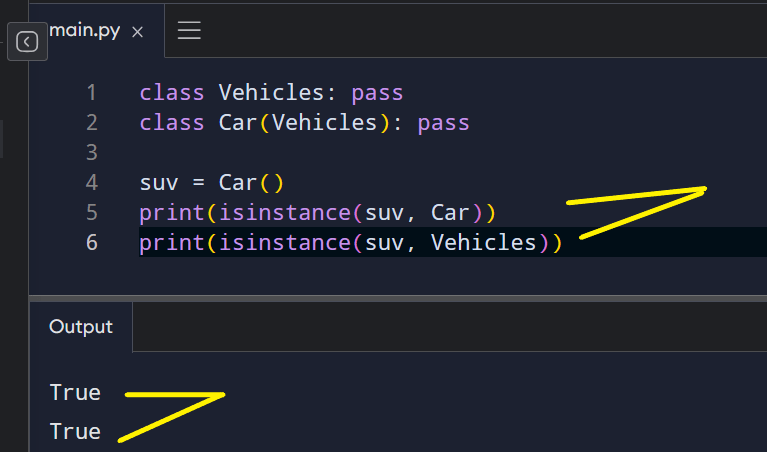
On the other hand, isinstance() is used to check if an object is an instance of a specific class or type.
This is very helpful when you want to ensure that a variable is of a certain type before performing operations on it.
The syntax is: isinstance(obj, classinfo)
Regarding the parameters, obj refers to the object to check and classinfo to the class, type or a tuple of classes/types.
For example,
When comparing types with type() can be misleading
The type() function checks the object’s exact class, but not its inheritance hierarchy. So if you use type() to answer an inheritance question, you’ll get misleading results.
Let’s see an example:

Here, we want to issue a badge to all employees. But the subcategory “Manager” is excluded due to lack of inheritance.
This is incorrect since, obviously, A Manager is an Employee, but type() only compares: type(bob) == Emploee that becomes Manager == Emploee which evaluates to False.
When replacing the type check with isinstance:
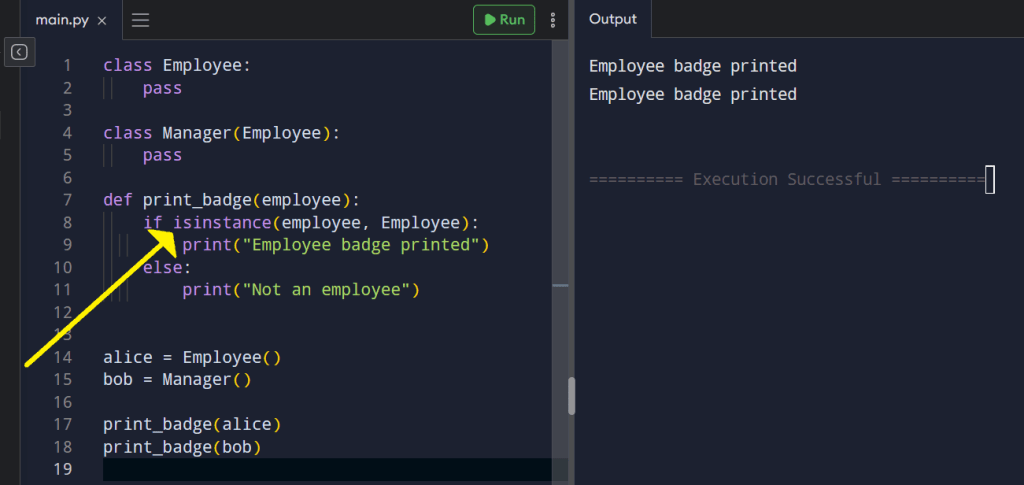
Now what you get is not misleading.
This works because isinstance() walks up the inheritance hierarchy.
It essentially asks:
“Is this object an instance of Employee or any subclass of Employee?”
For bob, the answer is yes.
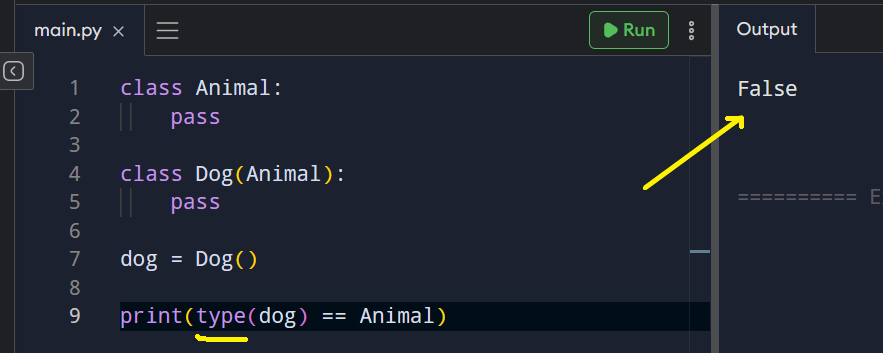
The type() function does not consider parent classes when comparing types
Let’s compare the two approaches
Using type():
Using isinstance():
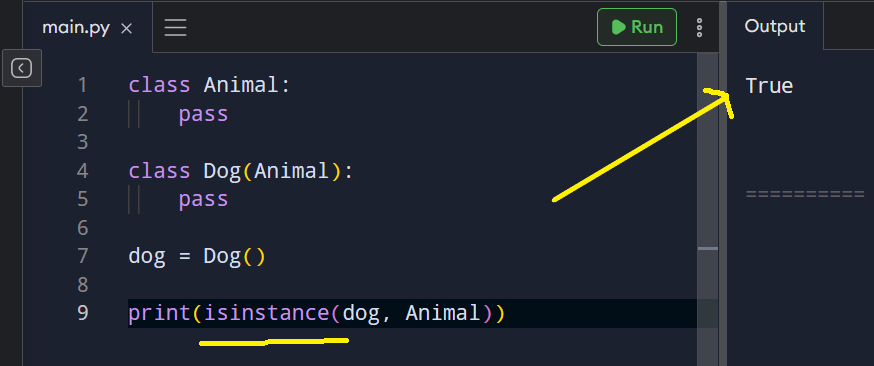
The first comparison asks:
“Was this object created directly from Animal?”
The second asks:
“Is this object an Animal or a subclass of Animal?”
That difference is why isinstance() is almost always the right choice when working with inheritance.
Concluding
Use type() when you need to know the object’s exact class.
Use isinstance() when you want to include subclasses.
In everyday Python code, isinstance() is almost always the better choice because it respects inheritance.