The <main> element contains the main content of a document.
This content must be unique, relating to the primary topic of the web page.
Repeated content among several documents or sections of a document, like headers, logos, navigation sections, sidebars, or footers should not be contained in the <main> element.
The correct placement of the <main> tag is within the BODY tag, typically after the <header>, <nav>, and <aside> tags.
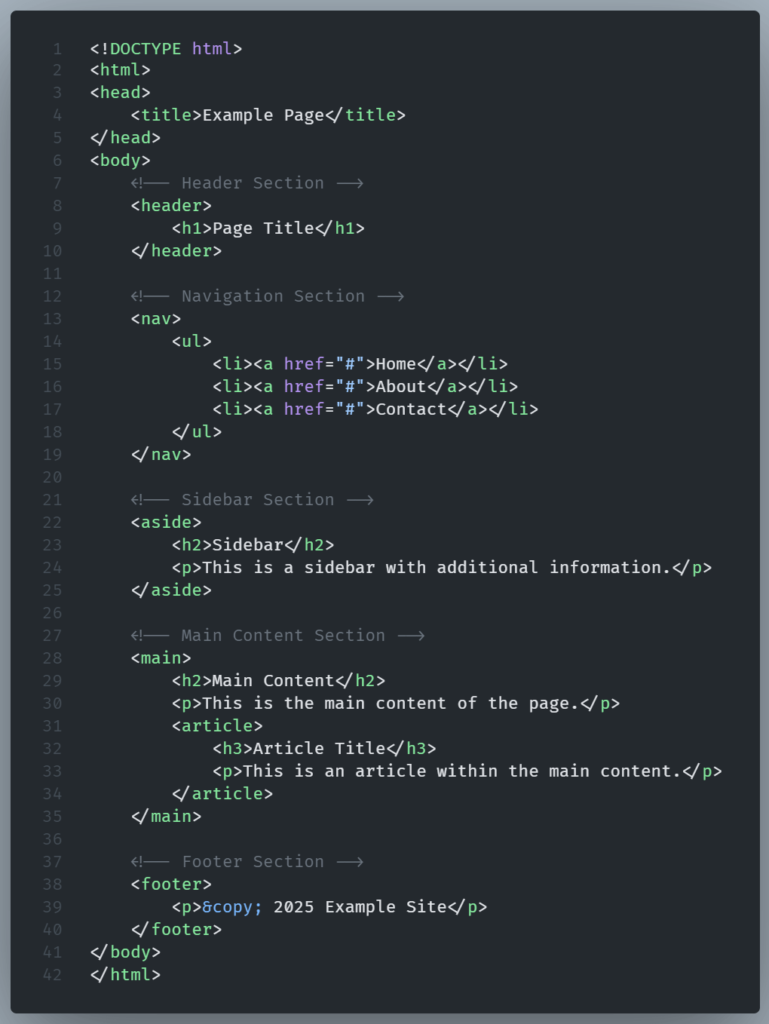
A webpage must contain just one <main> element. Using multiple <main> tags would be semantically incorrect.
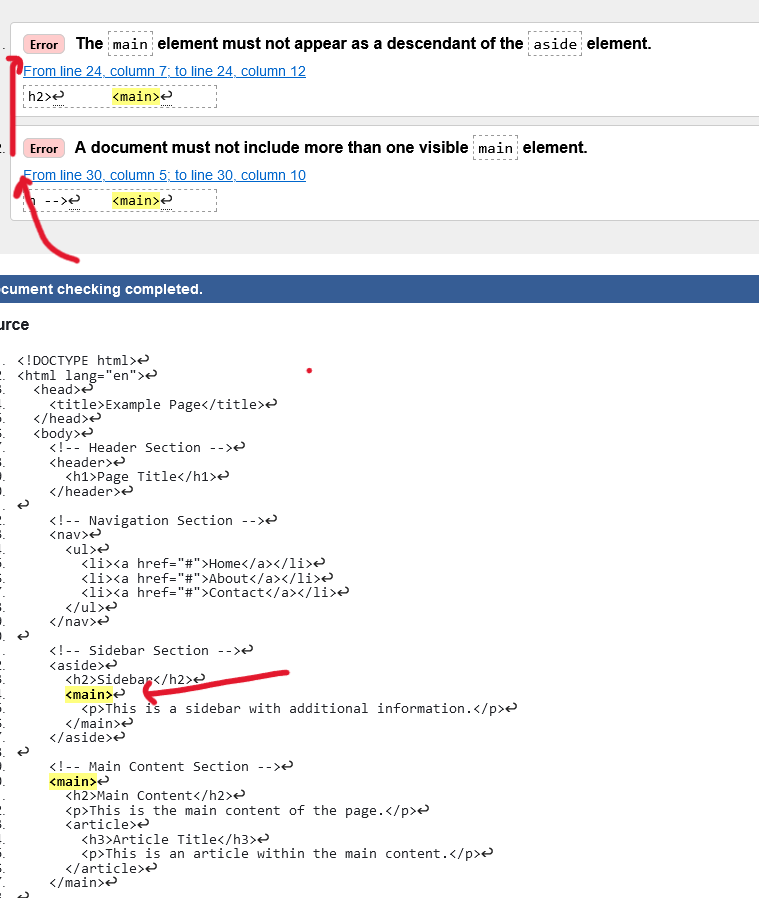
Although omitting <main> does not make our code invalid, there are several good reasons to use it.
Firstly, every page has a <main> tag in order to meet accessibility standards.
Assistive technologies recognize the main element as a landmark, giving users the option to jump straight into it, ignoring secondary or irrelevant content.
Secondly, it can help search engines that crawling your web pages be more efficient by easily identify the main content, and as a result process that and not what you consider as secondary content.
And last but not least, it’s beneficial for web development since we can better organize our code semantically.