When coding, errors are unavoidable. Recognizing these errors is vital for debugging your code in a fast and effective manner.
Error messages inform you exactly on what went wrong. Common Python errors include SyntaxError, NameError, TypeError, and IndexError.
Let’s see them one by one.
Common Error Messages
SyntaxError
A SyntaxError means Python cannot understand the structure of your code. This usually happens when something is missing or misplaced, such as a parenthesis or a colon.
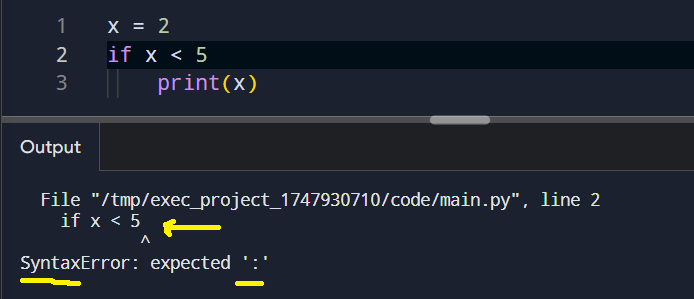
Here, Python expects a colon after the condition. The error points to the line where parsing failed.
NameError
A NameError occurs when you try to use a variable or function name that Python does not recognize.
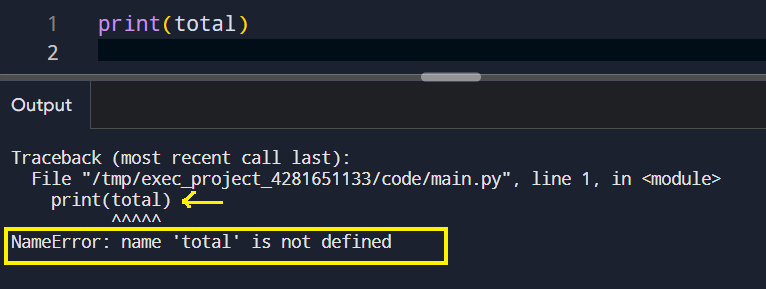
The total variable is not defined so Python raises a NameError.
NameErrors often occure due to spelling mistakes or using variables before assigning them.
TypeError
A TypeError means an operation was applied to the wrong type of value.
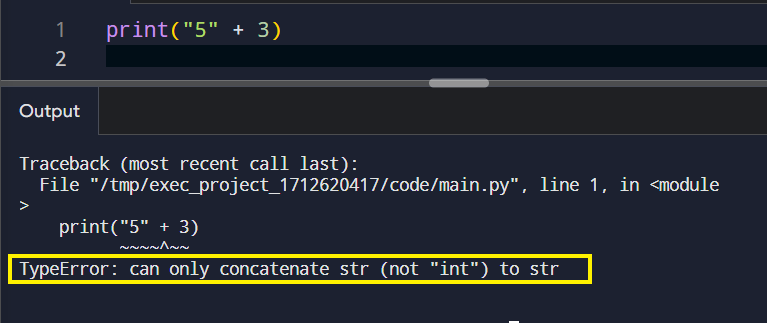
Here, Python cannot add a string and a number. The error message usually explains which types caused the problem, making it easier to correct.
IndexError
An IndexError appears when you try to access an item outside the valid range of a list.
![Python code attempts to access numbers[5] from a list of three elements, resulting in an IndexError stating list index out of range.](https://lambroshatzinikolaou.com/wp-content/uploads/2026/02/indexError.png)
Lists have fixed positions, so asking for an index that does not exist causes this error.
Concluding
Python error messages are intentionally designed to be descriptive. They tell you what went wrong and where it happened. Learning to read errors carefully is as important as learning syntax. Each error is a feedback. As you practice, these messages will feel less daunting and more like a source of information.