A 303 redirect can lead to an infinite loop.
It is not common and usually happens due to a coding mistake or misconfiguration.
How Could a 303 Redirect Cause an Infinite Loop?
An infinite loop occurs when our code accidentally sends the browser back to the same URL—or a chain of URLs that circle back—causing the browser to keep redirecting endlessly.
Here’s how it might happen:
Misconfigured Redirect Logic: Imagine a PHP script where form.php processes a form and redirects to itself with a 303:
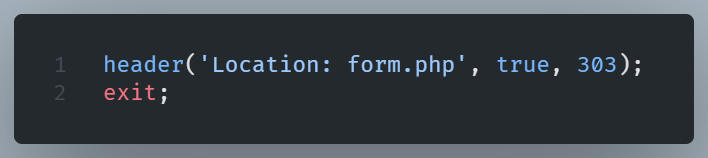
If form.php always issues a 303 redirect to itself, the browser gets stuck in a loop: form.php → form.php → form.php, and so on.
Circular Redirects: Suppose page1.php redirects to page2.php with a 303, but page2.php has logic that redirects back to page1.php. This creates a cycle: page1.php → page2.php → page1.php, ad infinitum.
Server Misconfiguration: If server rules (e.g., in .htaccess for Apache) are set up poorly, they might trigger a 303 redirect to the same or a looping URL pattern, especially when handling dynamic URLs.
How to Prevent an Infinite Loop
To avoid this headache, follow these tips:
Check Redirect Conditions: Ensure the redirect only triggers when it should. For example, in PHP:
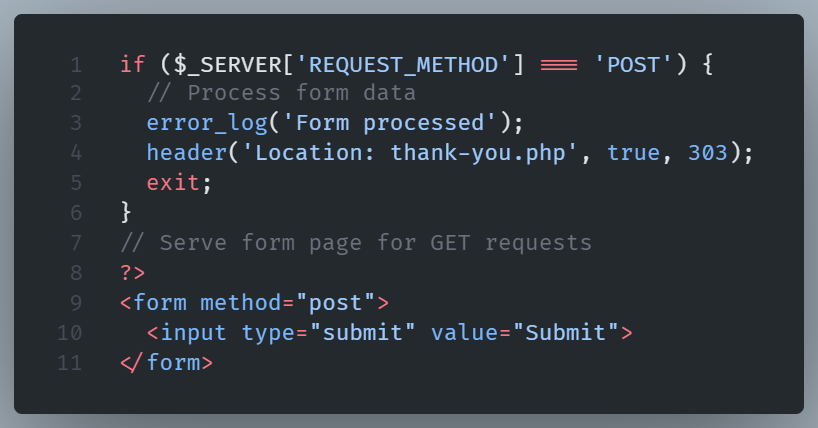
Here, a POST request is required before the 303 redirect is triggered, which prevents infinite looping.
Prevent circular redirects: plan your redirect routes. Ensure page1.php doesn’t redirect to page2.php if page2.php points back to page1.php.
Test Thoroughly: Try navigating your site manually. Browsers often stop infinite loops after a few redirects, showing an error like “Too many redirects,” but don’t rely on that.
Use Debugging Tools: Check server logs or browser developer tools (Network tab) to spot unexpected redirect patterns.
Wrapping Up
A 303 redirect can cause an infinite loop if you’re not careful, but it’s easily avoidable with clear logic and testing.
Infinite loops with 303 redirects are rare in practice because they’re usually caught during development. Most frameworks (like Laravel in PHP) have built-in safeguards, and modern browsers limit redirect chains.
Still, it’s a good habit to double-check your logic, especially when handling forms dynamically.